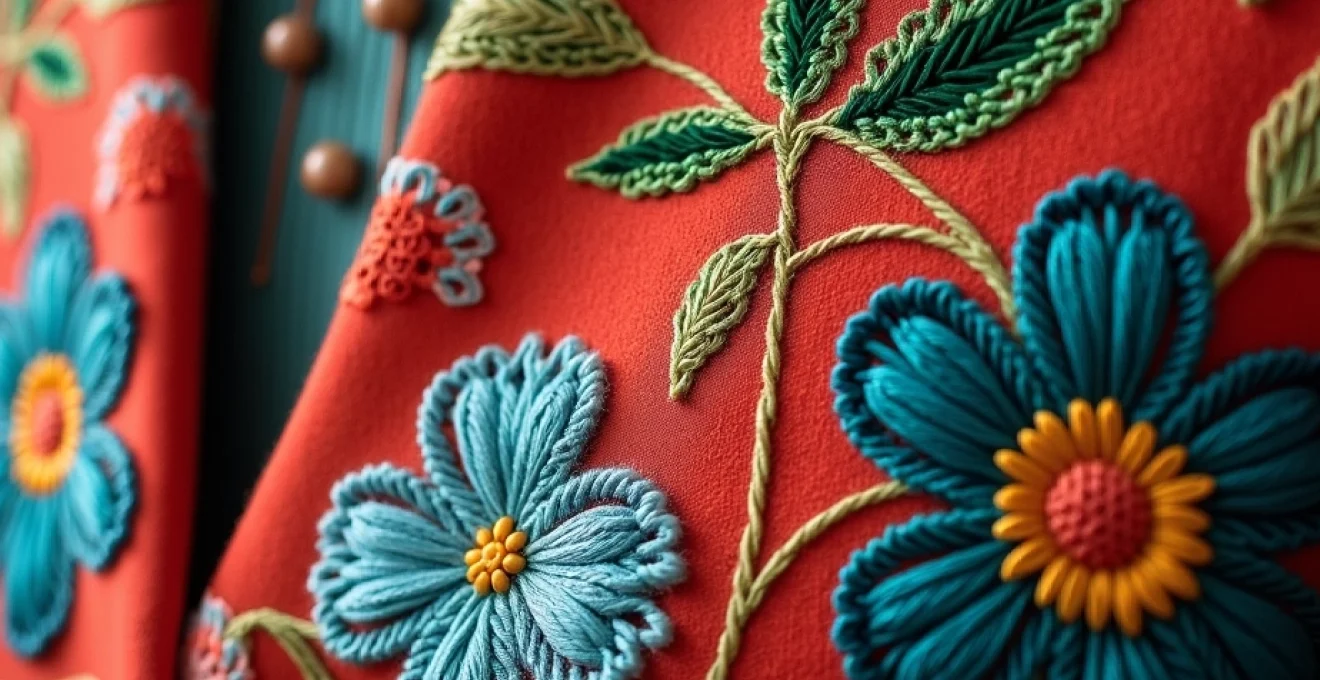
The fashion industry stands at a fascinating crossroads where ancient artisanal techniques meet contemporary design sensibilities. From the intricate tambour embroidery gracing luxury haute couture to the meticulous hand-knitted Fair Isle patterns adorning modern collections, traditional craft methods are experiencing an unprecedented renaissance. This revival transcends mere nostalgia, representing a fundamental shift towards sustainability, authenticity, and the celebration of human craftsmanship in an increasingly automated world.
Contemporary fashion houses are rediscovering the profound value of time-honoured techniques, not as museum pieces but as living, breathing methods capable of addressing modern concerns about mass production and environmental impact. The resurgence of these artisanal practices reflects consumers’ growing appetite for unique, meaningful garments that tell stories beyond their aesthetic appeal. This movement encompasses everything from the revival of Welsh tapestry weaving to the integration of Japanese sashiko techniques in contemporary streetwear.
Historical context and modern renaissance of artisanal fashion techniques
The relationship between traditional craft and fashion has evolved dramatically over the past century. During the Industrial Revolution, mechanisation threatened to render hand-crafted techniques obsolete, yet today these same methods represent the pinnacle of luxury and exclusivity. The contemporary fashion landscape demonstrates how historical craft techniques can be seamlessly integrated with modern production methods, creating garments that honour tradition while meeting contemporary demands for innovation and sustainability.
The resurgence of artisanal techniques reflects broader cultural shifts towards authenticity and provenance. Fashion houses increasingly recognise that consumers seek connections to the makers behind their garments, driving demand for transparency in production methods. This trend has elevated previously marginalised craft traditions, with brands actively seeking partnerships with traditional artisan communities worldwide. The economic impact extends beyond fashion houses to support entire communities whose livelihoods depend on maintaining these ancestral skills.
Modern technology paradoxically aids this craft revival, with digital documentation preserving techniques that might otherwise disappear. Advanced photography, video tutorials, and virtual reality experiences now capture the nuances of master craftspeople’s movements, ensuring knowledge transfer to new generations. This technological preservation has become crucial as traditional apprenticeship systems face challenges from urbanisation and changing economic structures. Fashion brands increasingly invest in educational programmes and craft preservation initiatives, recognising their role as cultural custodians.
The timing of this renaissance coincides with growing environmental consciousness within the fashion industry. Handcrafted techniques typically produce minimal waste, utilise local materials, and create durable garments designed to last generations rather than seasons. This aligns perfectly with circular economy principles, where the intrinsic value of skilled craftsmanship justifies higher price points and longer product lifecycles. The slow fashion movement has become synonymous with artisanal production methods, positioning craft revival as both culturally and environmentally progressive.
Traditional embroidery revival in contemporary fashion houses
Embroidery has emerged as the most visible symbol of craft revival in contemporary fashion, with luxury houses investing heavily in preserving and innovating traditional needlework techniques. The complexity and time-intensive nature of hand embroidery perfectly exemplifies the antithesis of fast fashion, creating garments that command premium prices and endure beyond seasonal trends. Modern fashion houses approach embroidery with archaeological precision, studying historical techniques while developing contemporary applications that speak to today’s aesthetic sensibilities.
Tambour embroidery techniques at lesage and maison vermont
Tambour embroidery represents one of the most technically demanding forms of decorative needlework, requiring years of training to master its distinctive chain-stitch technique. Maison Lesage, founded in 1924, continues to employ master embroiderers who spend decades perfecting their craft, using traditional tambour hooks to create intricate patterns on fine fabrics. The technique involves stretching fabric over a frame and using a hooked needle to pull thread through from below, creating continuous chains of stitches that can form elaborate motifs.
Contemporary applications of tambour work extend beyond traditional beading and sequin attachment to incorporate unconventional materials like metallic fibres, synthetic threads, and even recycled materials. Maison Vermont has pioneered innovative approaches that combine traditional tambour techniques with modern materials, creating textural effects previously impossible with historical methods. Their work demonstrates how ancient techniques can evolve without losing their essential character, adapting to contemporary aesthetic demands while maintaining technical integrity.
The economic model surrounding tambour embroidery illustrates the premium value placed on artisanal skills. A single haute couture gown may require hundreds of hours of tambour work, with master embroiderers commanding wages that reflect their specialised expertise. This investment model has proven sustainable, as clients increasingly value the human touch and cultural heritage embedded in such pieces. Training programmes at these ateliers ensure knowledge transfer, with apprentices spending years learning not just techniques but understanding the cultural context that gives tambour work its significance.
Goldwork and metal thread applications in haute couture
Goldwork embroidery represents the pinnacle of luxurious needlework, with techniques dating back millennia yet finding fresh expression in contemporary haute couture. Modern applications utilise both traditional gold and silver threads alongside innovative metallic fibres that offer similar visual impact with improved durability and workability. The technique requires specialised skills in handling delicate metal threads, understanding how different metals react to fabric tension, and creating dimensional effects through layering and padding.
Contemporary goldwork extends beyond ceremonial and religious applications to encompass avant-garde fashion expressions. Designers experiment with oxidised metals, creating patina effects that evolve over time, or incorporate LED fibres within traditional goldwork frameworks to create illuminated garments. These innovations demonstrate how traditional techniques can embrace technological advancement while maintaining their essential craft character. The key lies in understanding the fundamental principles underlying the technique rather than slavishly replicating historical applications.
The preservation of goldwork techniques faces unique challenges due to material costs and the highly specialised nature of the skills involved. Many fashion houses now maintain in-house goldwork specialists, recognising that outsourcing such work risks losing quality control and cultural continuity. Investment in goldwork capabilities has become a mark of serious commitment to craft heritage, with brands viewing their embroidery ateliers as cultural assets worthy of significant investment and protection.
Cross-cultural embroidery integration: suzani, kantha, and sashiko
The globalisation of fashion has facilitated unprecedented cross-cultural exchange of embroidery techniques, with designers incorporating traditional methods from diverse cultural contexts into contemporary collections. Suzani embroidery from Central Asia, with its bold floral motifs and vibrant colours, has found new expression in modern streetwear and accessories. Similarly, the running-stitch technique of Bengali kantha work, traditionally used for quilting layers of old saris, now appears in high-fashion applications creating textural surfaces and narrative elements.
Japanese sashiko represents perhaps the most philosophically aligned traditional technique with contemporary sustainability concerns. Originally developed as a method for strengthening and repairing textiles, sashiko’s aesthetic of visible mending perfectly embodies circular fashion principles. Modern applications range from decorative elements on luxury goods to functional reinforcement in workwear, demonstrating how traditional repair techniques can become design features in their own right.
The ethical dimensions of cross-cultural technique adoption require careful consideration, with responsible brands ensuring proper attribution and economic benefit to originating communities. Successful integration involves collaboration rather than appropriation, with fashion houses establishing partnerships that provide ongoing support to traditional craftspeople. This approach creates authentic cultural exchange while maintaining the integrity and meaning of traditional techniques within their new contexts.
Machine-assisted hand embroidery: cornely and modern adaptations
The integration of mechanical assistance with hand embroidery techniques represents a fascinating evolution that maintains craft authenticity while improving efficiency and consistency. Cornely machines, developed in the 19th century, enable rapid chain-stitch embroidery while requiring significant operator skill to guide the fabric and control stitch formation. Modern adaptations of these principles include computer-guided systems that follow hand-drawn patterns while maintaining the irregularity and character of human-controlled stitching.
Contemporary machine-assisted embroidery achieves effects impossible through purely manual methods, such as perfect repetition of complex motifs or integration of multiple thread types in single operations. However, the most successful applications maintain visible evidence of human control, preserving the slight irregularities that distinguish craft work from industrial production. This balance requires operators with deep understanding of both traditional techniques and modern machinery capabilities.
Training programmes for machine-assisted embroidery combine traditional craft education with technical instruction, creating hybrid skillsets that command premium wages in the fashion industry. The economic model proves sustainable because machine assistance enables higher output without compromising the artisanal character that justifies luxury pricing. This approach offers a viable path for traditional embroidery techniques to remain economically relevant in competitive global markets.
Fair isle Colour-Work techniques in luxury knitwear brands
Fair Isle knitting techniques, originating from the remote Shetland Islands, have experienced remarkable revival in luxury knitwear collections worldwide. The traditional method involves carrying multiple yarn colours across each row, creating intricate geometric patterns that require significant skill to execute properly. Modern applications extend the traditional palette and pattern vocabulary while maintaining the essential technical approach that gives Fair Isle its distinctive character and superior warmth properties.
Contemporary luxury brands approach Fair Isle with archaeological precision, studying museum pieces and working with traditional knitters to understand authentic construction methods. This research-driven approach ensures that modern interpretations maintain technical authenticity while allowing for creative expansion. The investment in understanding traditional methods pays dividends in garment quality, as authentic Fair Isle construction techniques produce superior drape, fit, and durability compared to machine-produced imitations.
The economic model surrounding authentic Fair Isle production demonstrates the viability of premium craft techniques in modern markets. Individual garments may require weeks of skilled labour, with prices reflecting both material quality and labour investment. This model succeeds because consumers increasingly recognise the value proposition of expertly crafted garments that improve with wear and last decades rather than seasons. The cultural cachet associated with authentic Fair Isle further justifies premium positioning.
Cable knitting patterns: aran traditions in modern collections
Aran knitting represents one of the most structurally complex forms of traditional needlework, with cable patterns creating three-dimensional textures that require advanced planning and execution skills. Traditional Aran patterns carry cultural significance, with different cable motifs representing various aspects of island life, from fishing nets to Celtic knotwork. Modern applications respect this heritage while exploring new possibilities for textural expression and garment construction.
Contemporary designers exploit Aran techniques’ structural properties to create architectural garments where cable patterns serve both decorative and functional purposes. Large-scale cable work can provide shaping and support within garments, eliminating need for separate structural elements. This integration of decoration and function exemplifies how traditional techniques can offer solutions to modern design challenges while maintaining their essential craft character.
The technical demands of Aran knitting ensure its continued position as a premium craft skill. Master Aran knitters possess encyclopaedic knowledge of pattern variations and construction techniques, understanding how different cable combinations interact and affect garment behaviour. This expertise cannot be easily replicated through automation, making skilled Aran knitters valuable contributors to luxury fashion production and ensuring the technique’s continued economic viability.
Intarsia knitting methods for pictorial design elements
Intarsia knitting enables the creation of pictorial elements within knitted fabrics, using separate yarns for different coloured areas rather than carrying multiple colours across each row. This technique produces flat, single-thickness fabric with sharp colour definition, making it ideal for incorporating logos, artwork, or photographic elements into knitwear. Modern intarsia work often combines traditional hand-manipulation techniques with computer-aided pattern development and colour matching.
Contemporary applications of intarsia extend beyond traditional sweater decoration to encompass large-scale textile art and architectural applications. Fashion houses commission intarsia artists to create bespoke patterns that tell brand stories or incorporate cultural references. The technique’s ability to replicate fine detail makes it valuable for creating limited-edition pieces that blur boundaries between fashion and fine art.
Training in intarsia techniques requires understanding both traditional knitting skills and contemporary design principles. Successful intarsia artists combine technical proficiency with artistic vision, creating pieces that exploit the medium’s unique properties rather than simply replicating designs better suited to other techniques. This combination of technical and artistic skills commands premium compensation and ensures continued demand for intarsia expertise in luxury fashion markets.
Hand-manipulated knit structures: bobbles, loops, and texture work
Advanced textural techniques in hand-knitting create three-dimensional effects that transform simple knitted fabrics into sculptural surfaces. Bobble knitting involves creating small raised spheres within the fabric structure, while loop knitting produces fuzzy, textural surfaces ideal for creating luxury loungewear and accessories. These techniques require precise tension control and deep understanding of how stitches interact to create desired effects.
Modern applications of textural knitting techniques extend to home furnishings, architectural textiles, and experimental fashion pieces that challenge conventional garment construction. Designers exploit these techniques’ ability to create variable density and texture within single pieces of fabric, producing garments that change character depending on wearing and viewing conditions. The tactile quality of hand-manipulated knits provides sensory experiences impossible to achieve through industrial production methods.
The market positioning of textural knit techniques emphasises their therapeutic and meditative qualities alongside their aesthetic appeal. Hand-knitting’s repetitive nature provides stress relief and creative satisfaction, making it attractive to consumers seeking meaningful engagement with their possessions. This psychological dimension adds value beyond mere aesthetics, supporting premium pricing for hand-manipulated knits in wellness-conscious market segments.
Artisanal textile weaving techniques in fashion manufacturing
Traditional weaving techniques occupy a unique position within the craft revival movement, representing both the foundation of all textile production and some of the most sophisticated expressions of human creativity and technical skill. Unlike embroidery or knitting, which embellish or construct garments from threads, weaving creates the fundamental fabric structure itself. This primacy gives weaving special significance in discussions of authentic craft production, as every textile begins with the fundamental interaction of warp and weft threads.
The revival of artisanal weaving techniques reflects growing recognition that industrially produced fabrics, despite their consistency and cost advantages, lack the character and individuality that hand-weaving provides. Each handwoven fabric carries subtle variations in tension, texture, and appearance that create unique visual and tactile qualities. These irregularities, once considered flaws in industrial contexts, now represent desirable authenticity markers that justify premium pricing and exclusive positioning.
The intersection of traditional weaving with contemporary fashion has created opportunities for innovation that respect historical techniques while addressing modern performance requirements and aesthetic preferences.
Harris tweed production methods and heritage brand collaborations
Harris Tweed represents perhaps the most protected and regulated traditional weaving technique in contemporary fashion, with legal protection ensuring that only cloth hand-woven in the Outer Hebrides using local wool can bear the Harris Tweed name. This protection has preserved not just a production method but an entire cultural ecosystem, including sheep breeding, wool processing, dyeing, and weaving traditions that span generations. Contemporary fashion brands increasingly recognise Harris Tweed’s unique positioning as both luxury material and cultural artifact.
Modern collaborations between Harris Tweed producers and international fashion houses demonstrate how traditional techniques can adapt to contemporary requirements without compromising authenticity. Designers work with weavers to develop new pattern variations and colour combinations while maintaining essential construction methods. These partnerships provide crucial economic support for island communities while introducing Harris Tweed to new markets and applications beyond traditional men’s outerwear.
The production constraints inherent in authentic Harris Tweed creation actually enhance its market appeal, as limited production capacity creates natural exclusivity. Individual weavers can produce only limited quantities annually, making Harris Tweed inherently scarce and valuable. This scarcity model succeeds because consumers understand and appreciate the human effort and cultural heritage embedded in each metre of cloth, justifying prices that reflect true production costs rather than mass-market expectations.
Ikat dyeing and weaving processes in contemporary fashion
Ikat represents one of the most technically challenging textile traditions, requiring precise calculation and execution to create patterns through resist-dyeing yarns before weaving. The technique exists in various forms across cultures, from Central Asian silk ikats to Indonesian cotton traditions, each with distinctive aesthetic characteristics and technical approaches. Contemporary fashion applications respect these cultural specificities while exploring new possibilities for pattern development and material integration.
Modern ikat production often combines traditional dyeing methods with contemporary materials and colour chemistry, achieving previously impossible colour combinations while maintaining the technique’s essential character. Computer-aided design helps calculate precise yarn arrangements for complex patterns, though execution still requires traditional skills and understanding. This technological assistance enhances rather than replaces human expertise, enabling more ambitious projects while preserving craft authenticity.
The global market for contemporary ikat demonstrates strong demand for authentic cultural textiles in fashion applications. Luxury brands source ikat fabrics directly from traditional producers, creating economic relationships that support craft communities while providing unique materials for high-end collections. This direct sourcing model ensures authenticity while providing transparency that increasingly sophisticated consumers demand from luxury purchases.
Jacquard hand-weaving for bespoke fabric development
Jacquard weaving represents the pinnacle of pattern complexity in hand-weaving, utilizing a system of punched cards or modern digital controls to manage hundreds of individual warp threads. Originally developed by Joseph Marie Jacquard in the early 19th century, this technique enables the creation of intricate pictorial and geometric patterns that would be impossible through traditional weaving methods. Contemporary fashion houses increasingly commission bespoke Jacquard fabrics for signature pieces, recognizing that the technique’s complexity creates inherent exclusivity and visual impact.
Modern adaptations of Jacquard principles combine traditional hand-manipulation with computer-controlled systems, allowing weavers to create designs of unprecedented complexity while maintaining the subtle irregularities that distinguish handwoven textiles. The integration of digital design tools enables precise color placement and pattern registration, while hand-finishing processes ensure each piece retains artisanal character. This hybrid approach satisfies contemporary demands for both technical precision and craft authenticity, creating fabrics that perform like industrial textiles while possessing the soul of traditional handwork.
The economic model for bespoke Jacquard development reflects the technique’s position at the intersection of art, craft, and technology. Individual fabric designs may require months of development, with master weavers commanding fees comparable to specialized engineers or designers. This investment proves sustainable because Jacquard fabrics often become signature elements for luxury brands, providing distinctive visual identity that cannot be replicated by competitors. The technical barriers to entry ensure that mastery of Jacquard techniques remains valuable in an increasingly automated textile industry.
Training in contemporary Jacquard techniques requires understanding both traditional weaving principles and modern digital design tools. Successful practitioners combine deep knowledge of fiber behavior with ability to translate digital concepts into physical textile structures. This combination of traditional craft knowledge and technological fluency creates career opportunities that bridge historical techniques with contemporary fashion requirements, ensuring the technique’s continued relevance in luxury fashion markets.
Sustainable production models and artisan collaboration networks
The revival of traditional craft techniques in fashion has catalyzed the development of innovative production models that prioritize sustainability, cultural preservation, and equitable economic relationships. These emerging frameworks demonstrate how fashion brands can maintain commercial viability while supporting artisan communities and minimizing environmental impact. The key lies in recognizing that sustainable craft production requires long-term thinking, patient investment, and genuine partnership with traditional makers rather than extractive relationships that exploit cultural heritage without providing meaningful benefit to originating communities.
Contemporary sustainable craft models often involve direct partnerships between fashion houses and artisan cooperatives, eliminating intermediary layers that traditionally captured value while providing little support to actual makers. These relationships typically include advance payments, technical support, design collaboration, and capacity building initiatives that strengthen artisan communities’ economic resilience. Successful partnerships recognize that traditional craftspeople possess deep technical knowledge while potentially lacking access to contemporary markets, design trends, or business development resources.
The economic sustainability of craft-based fashion depends on educating consumers about the true costs of artisanal production, including fair wages for skilled labor, sustainable material sourcing, and long-term community support. Brands invest heavily in storytelling and transparency initiatives that communicate the human and cultural value embedded in craft-produced garments. This educational approach has proven effective with affluent consumers who seek authentic luxury experiences and understand that meaningful craftsmanship commands premium pricing.
Technology plays a crucial supportive role in sustainable craft networks, providing communication platforms, design sharing systems, and quality control mechanisms that enable effective collaboration across geographic distances. Digital tools help preserve traditional techniques through detailed documentation while facilitating knowledge transfer between master craftspeople and new practitioners. However, successful technology integration maintains focus on enhancing rather than replacing human skills, ensuring that digital tools support rather than supplant traditional craft knowledge.
Environmental benefits of craft-based production extend beyond reduced mechanization to encompass local material sourcing, minimal transportation requirements, and creation of durable goods designed for decades rather than seasons of use. Traditional craft techniques often incorporate indigenous materials and dyes that provide superior environmental performance compared to industrial alternatives. Natural indigo dyeing, for example, produces rich colors without toxic chemicals while supporting biodiversity through cultivation of traditional dye plants.
Economic impact and market positioning of craft-based fashion labels
The economic landscape for craft-based fashion has transformed dramatically as consumers increasingly value authenticity, sustainability, and cultural connection over mass-produced alternatives. Premium positioning has become not just viable but necessary for craft-based labels, as the true costs of artisanal production cannot be absorbed at mass-market price points. This economic reality has created opportunities for brands that can effectively communicate the value proposition of traditional techniques while building sustainable business models around limited production capacity and extended product development timelines.
Market research indicates that luxury consumers are willing to pay significant premiums for garments that demonstrate authentic craft heritage, with some studies showing price tolerances 300-500% above mass-produced equivalents. This willingness stems from growing recognition that handcrafted items offer superior longevity, unique aesthetic qualities, and meaningful cultural connections that justify initial investment. The key to successful market positioning lies in educating consumers about the skills, time, and cultural significance embedded in traditional craft techniques.
Revenue models for craft-based fashion typically emphasize limited editions, custom work, and seasonal collections that align production capacity with artisan capabilities rather than market demand. This approach creates natural scarcity that enhances perceived value while respecting the human limitations of traditional production methods. Successful brands often maintain waiting lists for popular items, turning production constraints into marketing advantages that reinforce exclusivity positioning.
The global market for craft-based fashion has demonstrated remarkable resilience during economic uncertainties, as affluent consumers continue investing in meaningful luxury goods even when reducing spending on mass-market fashion. This counter-cyclical behavior reflects craft fashion’s positioning as investment rather than consumption, with buyers viewing artisanal pieces as lasting additions to their wardrobes rather than seasonal purchases. The psychological satisfaction derived from owning expertly crafted items provides additional value that justifies premium pricing even during economic downturns.
Distribution strategies for craft-based fashion focus on channels that can effectively communicate product stories and cultural contexts, with direct-to-consumer sales, high-end boutiques, and museum shops proving most effective. Online platforms designed for luxury goods provide global reach while maintaining the personalized service experiences that craft-fashion customers expect. The most successful brands combine digital marketing with physical experiences, allowing customers to meet makers, observe production processes, and understand the cultural contexts that give traditional techniques their meaning and value.
Investment in craft-based fashion labels has attracted attention from impact investors and cultural preservation organizations, recognizing both financial potential and social benefits of supporting traditional techniques. This funding model acknowledges that craft-based businesses may require longer development timelines and different success metrics compared to conventional fashion ventures. Patient capital providers understand that the most valuable aspects of craft-based fashion – cultural preservation, artisan skill development, and sustainable production methods – generate returns that extend beyond purely financial measures.
The employment impact of craft revival extends throughout supply chains, creating opportunities for traditional materials suppliers, specialized tool makers, and cultural educators alongside direct production roles. These ecosystem effects demonstrate how investment in craft-based fashion can support entire cultural economies rather than just individual businesses. Regional economic development agencies increasingly recognize traditional crafts as valuable assets for cultural tourism and export development, providing additional support for craft-based fashion initiatives.